Category Archives: Conflict

‘John McCain’ to Nab Suspect DPRK Ship

U.S. Military Set to Intercept North Korean Ship Suspected of Proliferating Missiles, Nukes

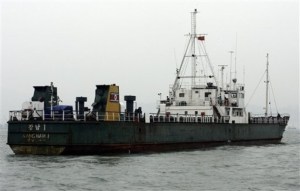
USS-John-S-McCain-DDG-56-0001(FoxNews.com) The USS John McCain, a navy destroyer, will intercept the ship Kang Nam as soon as it leaves the vicinity off the coast of China, according to a senior U.S. defense official.

The U.S. military is planning to intercept a flagged North Korean ship suspected of proliferating weapons material in violation of a U.N. Security Council resolution passed last Friday, FOX News has learned.

The USS John McCain, a navy destroyer, will intercept the ship Kang Nam as soon as it leaves the vicinity off the coast of China, according to a senior U.S. defense official. The order to inderdict has not been given yet, but the ship is getting into position.

kangnam-APThe ship left a port in North Korea Wednesday and appears to be heading toward Singapore, according to a senior U.S. military source. The vessel, which the military has been tracking since its departure, could be carrying weaponry, missile parts or nuclear materials, a violation of U.N. Resolution 1874, which put sanctions in place against Pyongyang.

Continue reading


More on North Korean standoff, nuclear and missile developments

Leave a comment

Filed under Chicanery, Conflict

Bibi Sets the Tone

protretAccording to the June 14th speech by Israeli Prime Minister Benjamin (Bibi) Netanyahu, there are certain “red lines” that Israel will not cross in pursuing peace with its Arab Palestinian neighbours.
(Full text of  address)

Condensed into a few points (with comments):

Israel must be secure. The security argument is based generally upon two needs: 1) That all of Israel’s borders must be defensible; and 2) That any eventual Palestinian state not be permitted to have a standing army or be able to conclude defensive pacts or military alliances with other countries – Iran was specifically mentioned by name because it arms and otherwise supports such groups as Hezbollah and Hamas.

This doesn’t mean that the Palestinian state will be prohibited from having internal security services adequate to the maintenance of order within its territory — in fact, the Palestinian Authority has largely been armed by Israel and the United States.

Beyond Palestine’s imagined borders would rest Jordan, Egypt and, of course, Israel. If any future peace agreement contained commitments by each of these countries to defend Palestine from external attack, why would the young state want to bear the expense of maintaining an army?


Israel must primarily be a Jewish state
, with freedom of religion for all faiths. This touches upon an important demographic requirement: That the Palestinian refugee problem be settled outside of Israel proper (i.e. within the future borders of a Palestinian state).

Aside from the social and economic chaos that would result if Israel (a very small country) was forced to absorb literally millions of Palestinian refugees, there is also a politically existential angle; since Israel is a democracy, it would be exposed to the very real risk of voting itself out of existence.

Egyptian President Hosni Mubarak implied that no Arab country would ever recognise Israel as a Jewish state, being situated as it is, so close to the heart of the Islamic world. This could be seen as somewhat hypocritical since Egypt does recognise more than a half dozen countries that are officially Islamic states, as well as sixteen nations (plus itself) which have officially adopted Islam as their state religion.


Jerusalem must remain the undivided capital of Israel.
Jews feel and think about Jerusalem in somewhat the same way that Muslims feel about Mecca. Muslims have prayed facing in the direction Mecca for about 1400 years. Jews have been praying towards Jerusalem since Solomon’s edict to do so — almost 3000 years ago.

Though most of the region’s inhabitants were used to praying while facing Jerusalem (most of them being Jews or early Christians who also maintained the established practice), Mohammed issued an edict requiring that all Muslims pray in the direction of Mecca. Ironically, Mecca was itself established and controlled by the Jewish Quraish tribe for centuries prior to the arrival of Mohammed.

Jerusalem is central to the identity of the Jews and is foremost, of all earthly places, in their prayers. Unlike Mecca, though, anyone (of any religion) may visit Jerusalem. The city is mentioned by name more than 600 times in the Torah (the five books of Moses or Pentateuch) and almost 800 times in the larger assembly of books recognised as the Jewish Bible (Tanakh). In the Christian New Testament, it is mentioned by name 154 times. Jerusalem is not mentioned by name even once in the Qur’an.

Under Israeli stewardship, religious tourism and pilgrimages are possible to virtually all Jewish, Christian and Muslim holy sites in Jerusalem, but also to all those within Israel proper and throughout a substantial proportion of the West Bank. Such was not the case when the West Bank was under Jordanian rule; all Jews were expelled from their Jerusalem homes in 1948-49 and were unable to return until 1967. Also, during this period, most Jewish houses of worship and a number of shrines sacred to Judaism were destroyed.

The area of greater Jerusalem, beyond the walls of the Old City, is predominantly Jewish in the West and mostly Arab in the East. There are many Jews living in East Jerusalem and many Arabs residing in West Jerusalem, which would make it difficult to divide the city while preserving its character and its ability to function as a municipality. The Palestinians consider the Old City (which contains the Temple Mount, Al-Aqsa Mosque, the Western Wall, the Dome of the Rock and the Church of the Holy Sepulchre, to name a few of its most important holy sites) to rest entirely within East Jerusalem, which they envision to be the capital of their future state. The Old City also contains its own historical Jewish Quarter, Armenian Quarter, Christian Quarter and Muslim Quarter — in chronological order of establishment.

East and West Jerusalem as they are defined on political maps are artificial constructs of man’s own design. The East and the West of Jerusalem, and for that matter, the North and the South of it, can only truly be judged in relation to the Rock that lies at the very heart of it.

Remarkably, the Old City occupies barely more than one-third of one square mile of land!

800px-Jerusalem_Dome_of_the_rock_BW_14.JPG

1 Comment

Filed under Conflict, Life, Reason

The Netanyahu Speech (Full text)

Speech by Israeli Prime Minister Binyamin Netanyahu
Begin-Sadat Center at Bar-Ilan University, June 14, 2009
:
(as purloined by me from the Jerusalem Post)

Honored guests, citizens of Israel.

Peace has always been our people’s most ardent desire. Our prophets gave the world the vision of peace, we greet one another with wishes of peace, and our prayers conclude with the word “peace.”

We are gathered this evening in an institution named for two pioneers of peace, Menachem Begin and Anwar Sadat, and we share in their vision.

Two-and-a-half months ago, I took the oath of office as the prime minister of Israel. I pledged to establish a national unity government – and I did. I believed, and I still believe, that unity was essential for us now more than ever as we face three immense challenges – the Iranian threat, the economic crisis and the advancement of peace.

The Iranian threat looms large before us, as was further demonstrated yesterday. The greatest danger confronting Israel, the Middle East, the entire world and human race, is the nexus between radical Islam and nuclear weapons. I discussed this issue with President [Barack] Obama during my recent visit to Washington, and I will raise it again in my meetings next week with European leaders. For years, I have been working tirelessly to forge an international alliance to prevent Iran from acquiring nuclear weapons.

Confronting a global economic crisis, the government acted swiftly to stabilize Israel’s economy. We passed a two-year budget in the government – and the Knesset will soon approve it.

And the third challenge, so exceedingly important, is the advancement of peace. I also spoke about this with President Obama, and I fully support the idea of a regional peace that he is leading.

I share the president’s desire to bring about a new era of reconciliation in our region. To this end, I met with President [Hosni] Mubarak in Egypt and King Abdullah in Jordan to elicit the support of these leaders in expanding the circle of peace in our region.

I turn to all Arab leaders tonight and I say: Let us meet. Let us speak of peace and let us make peace. I am ready to meet with you at any time. I am willing to go to Damascus, to Riyadh, to Beirut, to any place – including Jerusalem.

I call on the Arab countries to cooperate with the Palestinians and with us to advance an economic peace. An economic peace is not a substitute for a political peace, but an important element to achieving it. Together, we can undertake projects to overcome the scarcities of our region, like water desalination, or to maximize its advantages, like developing solar energy, or laying gas and petroleum lines, and transportation links between Asia, Africa and Europe.

The economic success of the Gulf States has impressed us all, and it has impressed me. I call on the talented entrepreneurs of the Arab world to come and invest here and to assist the Palestinians – and us – in spurring the economy.

Together, we can develop industrial areas that will generate thousands of jobs and create tourist sites that will attract millions of visitors eager to walk in the footsteps of history – in Nazareth and in Bethlehem, around the walls of Jericho and the walls of Jerusalem, on the banks of the Sea of Galilee and the baptismal site of the Jordan.

There is an enormous potential for archeological tourism, if we can only learn to cooperate and to develop it.

I turn to you, our Palestinian neighbors, led by the Palestinian Authority, and I say: Let’s begin negotiations immediately without preconditions.

Israel is obligated by its international commitments and expects all parties to keep their commitments.

We want to live with you in peace, as good neighbors. We want our children and your children to never again experience war: that parents, brothers and sisters will never again know the agony of losing loved ones in battle; that our children will be able to dream of a better future and realize that dream; and that together we will invest our energies in plowshares and pruning hooks, not swords and spears.

I know the face of war. I have experienced battle. I lost close friends, I lost a brother. I have seen the pain of bereaved families. I do not want war. No one in Israel wants war.

If we join hands and work together for peace, there is no limit to the development and prosperity we can achieve for our two peoples – in the economy, agriculture, trade, tourism and education – most importantly, in providing our youth a better world in which to live, a life full of tranquility, creativity, opportunity and hope.

If the advantages of peace are so evident, we must ask ourselves why peace remains so remote, even as our hand remains outstretched to peace? Why has this conflict continued for more than 60 years?

In order to bring an end to the conflict, we must give an honest and forthright answer to the question: What is the root of the conflict?

In his speech to the first Zionist Conference in Basel, the founder of the Zionist movement, Theodor Herzl, said about the Jewish national home, “This idea is so big that we must speak of it only in the simplest terms.” Today, I will speak about the immense challenge of peace in the simplest words possible.

Even as we look toward the horizon, we must be firmly connected to reality, to the truth. And the simple truth is that the root of the conflict was, and remains, the refusal to recognize the right of the Jewish people to a state of their own, in their historic homeland.

In 1947, when the United Nations proposed the partition plan of a Jewish state and an Arab state, the entire Arab world rejected the resolution. The Jewish community, by contrast, welcomed it by dancing and rejoicing.

The Arabs rejected any Jewish state, in any borders.

Those who think that the continued enmity toward Israel is a product of our presence in Judea, Samaria and Gaza, is confusing cause and consequence.

The attacks against us began in the 1920s, escalated into a comprehensive attack in 1948 with the declaration of Israel’s independence, continued with the fedayeen attacks in the 1950s, and climaxed in 1967, on the eve of the Six Day War, in an attempt to tighten a noose around the neck of the State of Israel.

All this occurred during the 50 years before a single Israeli soldier ever set foot in Judea and Samaria .

Fortunately, Egypt and Jordan left this circle of enmity. The signing of peace treaties has brought about an end to their claims against Israel, an end to the conflict. But to our regret, this is not the case with the Palestinians. The closer we get to an agreement with them, the further they retreat and raise demands that are inconsistent with a true desire to end the conflict.

Many good people have told us that withdrawal from territories is the key to peace with the Palestinians. Well, we withdrew. But the fact is that every withdrawal was met with massive waves of terror, by suicide bombers and thousands of missiles.

We tried to withdraw with an agreement and without an agreement. We tried a partial withdrawal and a full withdrawal. In 2000 and again last year, Israel proposed an almost total withdrawal in exchange for an end to the conflict, and twice our offers were rejected.

We evacuated every last inch of the Gaza strip, we uprooted dozens of settlements and evicted thousands of Israelis from their homes, and in response, we received a hail of missiles on our cities, towns and children.

The claim that territorial withdrawals will bring peace with the Palestinians, or at least advance peace, has up till now not stood the test of reality.

In addition to this, Hamas in the South, like Hizbullah in the North, repeatedly proclaims its commitment to “liberate” the Israeli cities of Ashkelon, Beersheba, Acre and Haifa.

Territorial withdrawals have not lessened the hatred, and to our regret, Palestinian moderates are not yet ready to say the simple words: Israel is the nation-state of the Jewish people, and it will stay that way.

Achieving peace will require courage and candor from both sides, and not only from the Israeli side.

The Palestinian leadership must arise and say: “Enough of this conflict. We recognize the right of the Jewish people to a state of their own in this land, and we are prepared to live beside you in true peace.” I am yearning for that moment, for when Palestinian leaders say those words to our people and to their people, then a path will be opened to resolving all the problems between our peoples, no matter how complex they may be.

Therefore, a fundamental prerequisite for ending the conflict is a public, binding and unequivocal Palestinian recognition of Israel as the nation-state of the Jewish people.

To vest this declaration with practical meaning, there must also be a clear understanding that the Palestinian refugee problem will be resolved outside Israel’s borders. For it is clear that any demand for resettling Palestinian refugees within Israel undermines Israel’s continued existence as the state of the Jewish people.

The Palestinian refugee problem must be solved, and it can be solved, as we ourselves proved in a similar situation. Tiny Israel successfully absorbed tens of thousands of Jewish refugees who left their homes and belongings in Arab countries.

Therefore, justice and logic demand that the Palestinian refugee problem be solved outside Israel’s borders. On this point, there is a broad national consensus. I believe that with goodwill and international investment, this humanitarian problem can be permanently resolved.

So far I have spoken about the need for Palestinians to recognize our rights. In a moment, I will speak openly about our need to recognize their rights.

But let me first say that the connection between the Jewish people and the Land of Israel has lasted for more than 3,500 years. Judea and Samaria, the places where Abraham, Isaac and Jacob, David and Solomon, and Isaiah and Jeremiah lived, are not alien to us. This is the land of our forefathers.

The right of the Jewish people to a state in the Land of Israel does not derive from the catastrophes that have plagued our people. True, for 2,000 years, the Jewish people suffered expulsions, pogroms, blood libels and massacres which culminated in a Holocaust – a suffering which has no parallel in human history.

There are those who say that if the Holocaust had not occurred, the state of Israel would never have been established. But I say that if the state of Israel had been established earlier, the Holocaust would not have occurred.

This tragic history of powerlessness explains why the Jewish people need a sovereign power of self-defense.

But our right to build our sovereign state here, in the land of Israel, arises from one simple fact: This is the homeland of the Jewish people, this is where our identity was forged.

As Israel’s first prime minister, David Ben-Gurion, proclaimed in Israel’s Declaration of Independence: “The Jewish people arose in the Land of Israel, and it was here that its spiritual, religious and political character was shaped. Here they attained their sovereignty, and here they bequeathed to the world their national and cultural treasures, and the most eternal of books.”

But we must also tell the truth in its entirety: within this homeland lives a large Palestinian community. We do not want to rule over them, we do not want to govern their lives, we do not want to impose either our flag or our culture on them.

In my vision of peace, in this small land of ours, two peoples live freely, side-by-side, in amity and mutual respect. Each will have its own flag, its own national anthem, its own government. Neither will threaten the security or survival of the other.

These two realities – our connection to the Land of Israel, and the Palestinian population living within it – have created deep divisions in Israeli society. But the truth is that we have much more that unites us than divides us.

I have come tonight to give expression to that unity, and to the principles of peace and security on which there is broad agreement within Israeli society. These are the principles that guide our policy.

This policy must take into account the international situation that has recently developed. We must recognize this reality and at the same time stand firmly on those principles essential for Israel.

I have already stressed the first principle – recognition. Palestinians must clearly and unambiguously recognize Israel as the state of the Jewish people. The second principle is demilitarization. The territory under Palestinian control must be demilitarized with ironclad security provisions for Israel.

Without these two conditions, there is a real danger that an armed Palestinian state would emerge that would become another terrorist base against the Jewish state, such as the one in Gaza.

We don’t want Kassam rockets on Petah Tikva, Grad rockets on Tel Aviv, or missiles on Ben-Gurion Airport. We want peace.

In order to achieve peace, we must ensure that Palestinians will not be able to import missiles into their territory, to field an army, to close their airspace to us, or to make pacts with the likes of Hizbullah and Iran. On this point as well, there is wide consensus within Israel.

It is impossible to expect us to agree in advance to the principle of a Palestinian state without assurances that this state will be demilitarized.

On a matter so critical to the existence of Israel, we must first have our security needs addressed.

Therefore, today we ask our friends in the international community, led by the United States, for what is critical to the security of Israel: Clear commitments that in a future peace agreement, the territory controlled by the Palestinians will be demilitarized – namely, without an army, without control of its airspace, and with effective security measures to prevent weapons smuggling into the territory; real monitoring, and not what occurs in Gaza today. And obviously, the Palestinians will not be able to forge military pacts.

Without this, sooner or later, these territories will become another Hamastan. And that we cannot accept.

I told President Obama when I was in Washington that if we could agree on the substance, then the terminology would not pose a problem.

And here is the substance that I now state clearly: If we receive this guarantee regarding demilitarization and Israel’s security needs, and if the Palestinians recognize Israel as the state of the Jewish people, then we will be ready in a future peace agreement to reach a solution where a demilitarized Palestinian state exists alongside the Jewish state.

Regarding the remaining important issues that will be discussed as part of the final settlement, my positions are known: Israel needs defensible borders, and Jerusalem must remain the united capital of Israel with continued religious freedom for all faiths.

The territorial question will be discussed as part of the final peace agreement. In the meantime, we have no intention of building new settlements or of expropriating additional land for existing settlements.

But there is a need to enable the residents to live normal lives, to allow mothers and fathers to raise their children like families elsewhere. The settlers are neither the enemies of the people nor the enemies of peace. Rather, they are an integral part of our people, a principled, pioneering and Zionist public.

Unity among us is essential and will help us achieve reconciliation with our neighbors. That reconciliation must already begin by altering existing realities. I believe that a strong Palestinian economy will strengthen peace.

If the Palestinians turn toward peace – in fighting terror, in strengthening governance and the rule of law, in educating their children for peace and in stopping incitement against Israel – we will do our part in making every effort to facilitate freedom of movement and access, and to enable them to develop their economy. All of this will help us advance a peace treaty between us.

Above all else, the Palestinians must decide between the path of peace and the path of Hamas. The Palestinian Authority will have to establish the rule of law in Gaza and overcome Hamas. Israel will not sit at the negotiating table with terrorists who seek their destruction.

Hamas will not even allow the Red Cross to visit our kidnapped soldier Gilad Schalit, who has spent three years in captivity, cut off from his parents, his family and his people. We are committed to bringing him home, healthy and safe.

With a Palestinian leadership committed to peace, with the active participation of the Arab world, and the support of the United States and the international community, there is no reason why we cannot achieve a breakthrough to peace.

Our people have already proven that we can do the impossible. Over the past 61 years, while constantly defending our existence, we have performed wonders.

Our microchips are powering the world’s computers. Our medicines are treating diseases once considered incurable. Our drip irrigation is bringing arid lands back to life across the globe. And Israeli scientists are expanding the boundaries of human knowledge.

If only our neighbors would respond to our call – peace, too, will be in our reach.

I call on the leaders of the Arab world and on the Palestinian leadership, let us continue together on the path of Menachem Begin and Anwar Sadat, Yitzhak Rabin and King Hussein. Let us realize the vision of the prophet Isaiah, who in Jerusalem 2,700 years ago said: “Nation shall not lift up sword against nation, and they shall learn war no more.” With God’s help, we will know no more war. We will know peace.

.

Brief analysis of ‘red lines’ contained in the speech.

1 Comment

Filed under Conflict, Life, Reason

Kim Jong-un Dubbed ‘Brilliant Comrade’

NKorean leader’s son is ‘Brilliant Comrade’

By VIJAY JOSHI

kim-jong-un_sketchSEOUL, South Korea (AP) — The youngest son of North Korea’s authoritarian leader has been given the title of “Brilliant Comrade,” a sign the communist regime is preparing the 26-year-old to succeed the ailing Kim Jong Il, a newspaper reported.
The report came Friday as the U.N. Security Council approved new sanctions against North Korea for its recent nuclear test. There was no immediate reaction from Pyongyang, which has repeatedly warned it would view new sanctions as a declaration of war. South Korea welcomed the sanctions Saturday.

U.S. and South Korean intelligence authorities disclosed during a meeting this week that Kim Jong Un is now being referred to in the secretive regime as “Yongmyong-han Dongji,” which translates roughly as “Brilliant Comrade,” South Korea’s mass-circulation JoongAng Ilbo newspaper reported Friday.

An unidentified intelligence official quoted by the newspaper said the title means the North will engineer a cult of personality for the younger Kim — much like it was done for his father and grandfather, Kim Il Sung, the only two leaders North Korea has known.

The eldest Kim founded North Korea in 1948 in the aftermath of World War II when the peninsula was divided between the Soviet Union-controlled north and the U.S.-backed south.

Continue reading

Flip back through our entries on the North Korean issue

1 Comment

Filed under Chicanery, Conflict

The Eager Sanction

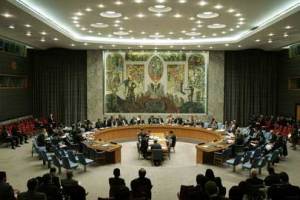
120307_security_council_reform_2Appended below is the final draft of the United Nations resolution concerning the Democratic People’s Republic of North Korea (DPRK).

The sanctions were unanimously adopted by the Security Council in today’s session, which included avid support for the measures by both Russia and China; states that had previously shied away from levying harsher penalties against the roguish regime of North Korean leader, Kim Jong-il.

The measures range from international trade and financing restrictions, to the protocols required for inspecting North Korean ships registered under the flags of other nations.

To be sure, with Chinese and Russian cooperation, these sanctions will sting — more than a bit.

China, so far, is advising extreme caution with regard to ship inspections.

I suppose we’ll have to wait and see what happens, which will give everyone some time to digest the current resolution…

.

Published, New York Times: June 10, 2009
(May need to be updated for last minute changes.)

.

The Security Council,

Recalling its previous relevant resolutions, including resolution 825 (1993), resolution 1540 (2004), resolution 1695 (2006), and, in particular, resolution 1718 (2006), as well as the statements of its President of 6 October 2006 (S/PRST/2006/41) and 13 April 2009 (S/PRST/2009/7),

Reaffirming that proliferation of nuclear, chemical and biological weapons, as well as their means of delivery, constitutes a threat to international peace and security,

Expressing the gravest concern at the nuclear test conducted by the Democratic People’s Republic of Korea (“the DPRK”) on 25 May 2009 (local time) in violation of resolution 1718 (2006), and at the challenge such a test constitutes to the Treaty on Non-Proliferation of Nuclear Weapons (“the NPT”) and to international efforts aimed at strengthening the global regime of non-proliferation of nuclear weapons towards the 2010 NPT Review Conference, and the danger it poses to peace and stability in the region and beyond,

Stressing its collective support for the NPT and commitment to strengthen the Treaty in all its aspects, and global efforts towards nuclear non-proliferation and nuclear disarmament, and recalling that the DPRK cannot have the status of a nuclear-weapon state in accordance with the NPT in any case,

Deploring the DPRK’s announcement of withdrawal from the NPT and its pursuit of nuclear weapons,

Underlining once again the importance that the DPRK respond to other security and humanitarian concerns of the international community,

Underlining also that measures imposed by this resolution are not intended to have adverse humanitarian consequences for the civilian population of the DPRK,

Expressing its gravest concern that the nuclear test and missile activities carried out by the DPRK have further generated increased tension in the region and beyond, and determining that there continues to exist a clear threat to international peace and security,

Reaffirming the importance that all Member States uphold the purposes and principles of the Charter of the United Nations,

Acting under Chapter VII of the Charter of the United Nations, and taking measures under its Article 41,

1. Condemns in the strongest terms the nuclear test conducted by the DPRK on 25 May 2009 (local time) in violation and flagrant disregard of its relevant resolutions, in particular resolutions 1695 (2006) and 1718 (2006), and the statement of its President of 13 April 2009 (S/PRST/2009/7);

2. Demands that the DPRK not conduct any further nuclear test or any launch using ballistic missile technology;

3. Decides that the DPRK shall suspend all activities related to its ballistic missile programme and in this context re-establish its pre-existing commitments to a moratorium on missile launches;

4. Demands that the DPRK immediately comply fully with its obligations under relevant Security Council resolutions, in particular resolution 1718 (2006);

5. Demands that the DRPK immediately retract its announcement of withdrawal from the NPT;

6. Demands further that the DPRK return at an early date to the NPT and International Atomic Energy Agency (IAEA) safeguards, bearing in mind the rights and obligations of States Parties to the NPT, and underlines the need for all States Parties to the NPT to continue to comply with their Treaty obligations;

7. Calls upon all Member States to implement their obligations pursuant to resolution 1718 (2006), including with respect to designations made by the Committee established pursuant to resolution 1718 (2006) (“the Committee”) pursuant to the statement of its President of 13 April 2009 (S/PRST/2009/7);

8. Decides that the DPRK shall abandon all nuclear weapons and existing nuclear programs in a complete, verifiable and irreversible manner and immediately cease all related activities, shall act strictly in accordance with the obligations applicable to parties under the NPT and the terms and conditions of the IAEA Safeguards Agreement (IAEA INFCIRC/403) and shall provide the IAEA transparency measures extending beyond these requirements, including such access to individuals, documentation, equipment and facilities as may be required and deemed necessary by the IAEA;

9. Decides that the measures in paragraph 8(b) of resolution 1718 (2006) shall also apply to all arms and related materiel, as well as to financial transactions, technical training, advice, services or assistance related to the provision, manufacture, maintenance or use of such arms or materiel;

10. Decides that the measures in paragraph 8(a) of resolution 1718 (2006) shall also apply to all arms and related materiel, as well as to financial transactions, technical training, advice, services or assistance related to the provision, manufacture, maintenance or use of such arms, except for small arms and light weapons and their related materiel, and calls upon States to exercise vigilance over the direct or indirect supply, sale or transfer to the DPRK of small arms or light weapons, and further decides that States shall notify the Committee at least five days prior to selling, supplying or transferring small arms or light weapons to the DPRK;

11. Calls upon all States to inspect, in accordance with their national legal authorities and consistent with international law, all cargo to and from the DPRK, in their territory, including seaports and airports, if the State concerned has information that provides reasonable grounds to believe the cargo contains items the supply, sale, transfer, or export of which is prohibited by paragraph 8(a), 8(b), or 8(c) of resolution 1718 or by paragraph 9 or 10 of this resolution, for the purpose of ensuring strict implementation of those provisions;

12. Calls upon all Member States to inspect vessels, with the consent of the flag State, on the high seas, if they have information that provides reasonable grounds to believe that the cargo of such vessels contains items the supply, sale, transfer, or export of which is prohibited by paragraph 8(a), 8(b), or 8(c) of resolution 1718 (2006) or by paragraph 9 or 10 of this resolution, for the purpose of ensuring strict implementation of those provisions;

13. Calls upon all States to cooperate with inspections pursuant to paragraphs 11 and 12, and, if the flag State does not consent to inspection on the high seas, decides that the flag State shall direct the vessel to proceed to an appropriate and convenient port for the required inspection by the local authorities pursuant to paragraph 11;

14. Decides to authorize all Member States to, and that all Member States shall, seize and dispose of items the supply, sale, transfer, or export of which is prohibited by paragraph 8(a), 8(b), or 8(c) of resolution 1718 or by paragraph 9 or 10 of this resolution that are identified in inspections pursuant to paragraph 11, 12, or 13 in a manner that is not inconsistent with their obligations under applicable Security Council resolutions, including resolution 1540 (2004), as well as any obligations of parties to the NPT, the Convention on the Prohibition of the Development, Production, Stockpiling and Use of Chemical Weapons and on Their Destruction of 29 April 1997, and the Convention on the Prohibition of the Development, Production and Stockpiling of Bacteriological (Biological) and Toxin Weapons and on Their Destruction of 10 April 1972, and decides further that all States shall cooperate in such efforts;

15. Requires any Member State, when it undertakes an inspection pursuant to paragraph 11, 12, or 13, or seizes and disposes of cargo pursuant to paragraph 14, to submit promptly reports containing relevant details to the Committee on the inspection, seizure and disposal;

16. Requires any Member State, when it does not receive the cooperation of a flag State pursuant to paragraph 12 or 13 to submit promptly to the Committee a report containing relevant details;

17. Decides that Member States shall prohibit the provision by their nationals or from their territory of bunkering services, such as provision of fuel or supplies, or other servicing of vessels, to DPRK vessels if they have information that provides reasonable grounds to believe they are carrying items the supply, sale, transfer, or export of which is prohibited by paragraph 8(a), 8(b), or 8(c) of resolution 1718 (2006) or by paragraph 9 or 10 of this resolution, unless provision of such services is necessary for humanitarian purposes or until such time as the cargo has been inspected, and seized and disposed of if necessary, and underlines that this paragraph is not intended to affect legal economic activities;

18. Calls upon Member States, in addition to implementing their obligations pursuant to paragraphs 8(d) and (e) of resolution 1718 (2006), to prevent the provision of financial services or the transfer to, through, or from their territory, or to or by their nationals or entities organized under their laws (including branches abroad), or persons or financial institutions in their territory, of any financial or other assets or resources that could contribute to the DPRK’s nuclear-related, ballistic missile-related, or other weapons of mass destruction-related programs or activities, including by freezing any financial or other assets or resources on their territories or that hereafter come within their territories, or that are subject to their jurisdiction or that hereafter become subject to their jurisdiction, that are associated with such programs or activities and applying enhanced monitoring to prevent all such transactions in accordance with their national authorities and legislation;

19. Calls upon all Member States and international financial and credit institutions not to enter into new commitments for grants, financial assistance, or concessional loans to the DPRK, except for humanitarian and developmental purposes directly addressing the needs of the civilian population, or the promotion of denuclearization, and also calls upon States to exercise enhanced vigilance with a view to reducing current commitments;

20. Calls upon all Member States not to provide public financial support for trade with the DPRK (including the granting of export credits, guarantees or insurance to their nationals or entities involved in such trade) where such financial support could contribute to the DPRK’s nuclear-related or ballistic missile-related or other WMD-related programs or activities;

21. Emphasizes that all Member States should comply with the provisions of paragraphs 8(a)(iii) and 8(d) of resolution 1718 (2006) without prejudice to the activities of the diplomatic missions in the DPRK pursuant to the Vienna Convention on Diplomatic Relations;

22. Calls upon all Member States to report to the Security Council within forty-five days of the adoption of this resolution and thereafter upon request by the Committee on concrete measures they have taken in order to implement effectively the provisions of paragraph 8 of resolution 1718 (2006) as well as paragraphs 9 and 10 of this resolution, as well as financial measures set out in paragraphs 18, 19 and 20 of this resolution;

23. Decides that the measures set out at paragraphs 8(a), 8(b) and 8(c) of resolution 1718 (2006) shall also apply to the items listed in INFCIRC/254/Rev.9/Part 1a and INFCIRC/254/Rev.7/Part 2a;

24. Decides to adjust the measures imposed by paragraph 8 of resolution 1718 (2006) and this resolution, including through the designation of entities, goods, and individuals, and directs the Committee to undertake its tasks to this effect and to report to the Security Council within thirty days of adoption of this resolution, and further decides that, if the Committee has not acted, then the Security Council will complete action to adjust the measures within seven days of receiving that report;

25. Decides that the Committee shall intensify its efforts to promote the full implementation of resolution 1718 (2006), the statement of its President of 13 April 2009 (S/PRST/2009/7) and this resolution, through a work programme covering compliance, investigations, outreach, dialogue, assistance and cooperation, to be submitted to the Council by 15 July 2009, and that it shall also receive and consider reports from Member States pursuant to paragraphs 10, 15, 16 and 22 of this resolution;

26. Requests the Secretary-General to create for an initial period of one year, in consultation with the Committee, a group of up to seven experts (“Panel of Experts”), acting under the direction of the Committee to carry out the following tasks: (a) assist the Committee in carrying out its mandate as specified in resolution 1718 (2006) and the functions specified in paragraph 25 of this resolution; (b) gather, examine and analyze information from States, relevant United Nations bodies and other interested parties regarding the implementation of the measures imposed in resolution 1718 (2006) and in this resolution, in particular incidents of non-compliance; (c) make recommendations on actions the Council, or the Committee or Member States, may consider to improve implementation of the measures imposed in resolution 1718 (2006) and in this resolution; and (d) provide an interim report on its work to the Council no later than 90 days after adoption of this resolution, and a final report to the Council no later than 30 days prior to termination of its mandate with its findings and recommendations;

27. Urges all States, relevant United Nations bodies and other interested parties, to cooperate fully with the Committee and the Panel of Experts, in particular by supplying any information at their disposal on the implementation of the measures imposed by resolution 1718 (2006) and this resolution;

28. Calls upon all Member States to exercise vigilance and prevent specialized teaching or training of DPRK nationals within their territories or by their nationals, of disciplines which could contribute to the DPRK’s proliferation sensitive nuclear activities and the development of nuclear weapon delivery systems;

29. Calls upon the DPRK to join the Comprehensive Test-Ban Treaty as soon as possible;

30. Supports peaceful dialogue, calls upon the DPRK to return immediately to the Six Party Talks without precondition, and urges all the participants to intensify their efforts on the full and expeditious implementation of the Joint Statements issued on 19 September 2005 and 13 February 2007, and the Joint Document issued on 3 October 2007, by China, the DPRK, Japan, the Republic of Korea, the Russian Federation and the United States, with a view to achieving the verifiable denuclearization of the Korean Peninsula and to maintain peace and stability on the Korean Peninsula and in north-east Asia;

31. Expresses its commitment to a peaceful, diplomatic and political solution to the situation and welcomes efforts by Council members as well as other Member States to facilitate a peaceful and comprehensive solution through dialogue and to refrain from any actions that might aggravate tensions;

32. Affirms that it shall keep the DPRK’s actions under continuous review and that it shall be prepared to review the appropriateness of the measures contained in paragraph 8 of resolution 1718 (2006) and paragraphs 8 and 9 of this resolution, including the strengthening, modification, suspension or lifting of the measures, as may be needed at that time in light of the DPRK’s compliance with relevant provisions of resolution 1718 (2006) and this resolution;

33. Underlines that further decisions will be required, should additional measures be necessary;

34. Decides to remain actively seized of the matter.

Leave a comment

Filed under Conflict, Reason