Given our prevailing concerns about swine flu, this might be a good time to look back at the 2003 SARS crisis. Reproduced below, courtesy of VizReport, is a 2006 SARS retrospective written at a time when we feared a widespread outbreak – not of swine flu – but of avian influenza (bird flu).
A Deadly Flu By Any Other Name…
The Truth About SARS
February 22, 2006 (Photo: www-micro.msb.le.ac.uk)

(VizReport) 1993 was a watershed year for research conferences on pandemic influenza. Plans were laid to fend off the perpetually looming scourge of a disastrous, widespread, virulent flu outbreak.
Ten years later, in 2003, a mystery infection dubbed “Severe Acute Respiratory Syndrome” (SARS) would provide a practical opportunity to test those those theories.
Though SARS is not a variety of influenza, its symptoms were strikingly similar to a severe flu. To better understand the functional relationship between SARS and the now seemingly imminent bird flu, it would be helpful to return to 1993…
The Groundwork
The Working Group on Influenza Pandemic Preparedness and Emergency Response (GrIPPE — the acronym spells the French word for influenza) was formed in that year under the aegis of the United Nations and quickly undertook its first meeting. It was immediately agreed that any approach with a reasonable expectation for success would have to be an international effort coordinated at the utmost level by the World Health Organisation (WHO).
Later that same year, the GEIG (Groupe d’Etude et d’Information sur la Grippe — of France) gathered in Berlin with representatives from WHO, as well as from GrIPPE and many other regional and international groups, to determine the best possible methods for reacting to an emerging pandemic.
Among their priorities was the intent to avoid a repeat of the 1976 swine flu fiasco in the U.S., which was thought to be similar to the notorious “Spanish Flu” that killed 50 million or more people, worldwide, in 1918 and 1919. Production of a new Swine Flu vaccine was pressed into overdrive because of widespread, media-inflated hype and approximately 40 million Americans (including US President Gerald Ford) dutifully lined up for their shots. Unfortunately, some of the vaccine stocks were contaminated, which gave rise to an unexpected and sometimes tragic neurological complication known as Guillain-Barré Syndrome.
Given that antiviral drugs had demonstrated limited success in combating the flu, it was agreed (at that conference, as well as in all subsequent discussions) that vaccination provided the human body with its best means of defense. Although newer antivirals (oseltamivir aka “Tamiflu”, and zanamivir aka “Relenza”) have come to market having demonstrated preventative as well as remedial advantages, the progress in the field of antivirals must still be considered to be in its infancy.
Many surveys and studies were conducted over the following eight years, but the attacks on New York and Washington, in September of 2001, resurrected a slumbering fear in the minds of researchers and the public alike that the hostile use of weaponised pathogens could indeed be imminent. In fact, the anthrax mailings which almost perfectly coincided with the plane hijackings, dispelled all doubt for most medical emergency planners.
The world watched via CNN as the CDC (the Centres for Disease Control, headquartered in Atlanta) and U.S. federal authorities dashed madly about trying to cope with a growing menace as anthrax seemed to be showing up in new places every day; eliciting postal restrictions, quarantines, and an intense forensic investigation that – to this day – remains unresolved.
Any contagious outbreak characterised by the acute onset of severe symptoms with above average mortality statistics automatically qualifies as a potential pandemic.
In the WHO pandemic regime, there are six tiers:
Phase 0 is the time in-between pandemics.
Phase 1 is the Alert stage, signifying that somewhere in the world a new strain has surfaced or that an older strain has re-emerged.
Phase 2 is the Confirmation stage, wherein an epidemic is declared in an affected region.
Phase 3 is International stage, at which point the pathogen has reached epidemic proportions in more than one country.
Phase 4 is the Impact phase which is relative to any region it affects and is measured by the amount of disturbance the epidemic causes in that particular region.
Phase 5 is the Resolution phase, wherein the pathogen ceases to be a factor in an affected region.
[Editor’s note: The WHO’s epidemiological phases, above, are different from the Pandemic Severity Index adopted by the U.S. Dept. of Health and Human Services in 2007, which rates pandemics (worldwide epidemics) based on five Categories, similar to the Saffir-Simpson Hurricane Scale.]
SARS: Toronto 2003
You will notice that the SARS outbreak conformed to each of the WHO phases:
1. A serious, unknown illness erupts in HongKong.
2. Many people began to fall ill. Possible epidemic.
3. Origin traced to Guangdong, China. Shows up in Toronto, Canada.
4. Quarantine and treatment measures invoked.
5. Illness subsides. No new cases.
While SARS was not officially declared a pandemic (and relatively few people actually died because of it; fewer than 75) the disease provided a reliable test case for the handling of an unknown and virulent pathogen based simply upon a disease “profile”, rather than upon an identifiable bacterium or virus. This is an important point.
The name, SARS, is an acronym for Severe Acute Respiratory Syndrome. That’s about as generic as one can get. In other words, patients get sick very rapidly and display marked respiratory distress.
That sounds an awful lot like pneuomonia. In fact, quite a few of the patients succumbing to the “disease” did test positive for pneumonia, though such confirmations were often ruled to be secondary complications of the primary syndrome. Every year in Canada, thousands of people die from respiratory diseases, particularly those with compromised immune systems and those of advanced years. The SARS outbreak in Canada was consistent with the typical yearly presentations with one small difference; doctors were provided a “menu” of symptoms against which to evaluate their incoming patients. Those who matched the “profile” within a certain tolerance were classified as “suspected” SARS cases while those who matched it more tightly were classed as “confirmed” SARS cases.
Early in the epidemic, the profile did not include a specific pathogen, just as the case would be in the early stages of almost any outbreak. Later, a coronavirus was added to the ‘profile’ in order to make a true 100% diagnosis achievable.
Later, it was determined that two separate (and generally unrelated) coronaviruses were linked to the confirmed cases. Since neither of the two viruses was a “recombinant” of the other (directly linked by sharing genetic material within a single patient) the chance of both being related to the SARS outbreak was remote.
That was a significant clue to the mystery, which, if followed to its logical end, would result in a fairly solid determination that most of the victims of SARS actually died from pneumonia brought on by fairly common colds.
Interestingly, fewer people died from severe respiratory complications during the SARS “outbreak” than in any recent year I can recall. This can be attributed to the fact that people received prompt and conscientious treatment under the rigorous protocols mandated by the public health offices (following the WHO guidelines) than they otherwise would have received during the course of a “normal” year, but that might not be the only reason.
There are a number of Ontario cities (London, Toronto, Ottawa, Kingston and Windsor among them) that match up on a demographic basis against many North American and European cities. The standard of health care in these centres is quite high; the populations are docile and sophisticated; also, the respective standards of living would have to be considered among the best in the world. In short, having an outbreak in Toronto is something of a “best case scenario”.
If the world health community was looking for the ideal place to test an emergency response plan, complete with quarantines and press conferences on a daily basis, they couldn’t pick a better place than Toronto. The populace is compliant and well mannered, affording a lesser chance of social disruption. The standard of medical care, regardless of income, is very good, thus eliminating much class-skewing in the data. The medical infrastructure is advanced; the training of staff excellent; the community literacy rate high – all leading to excellent testbed uniformity. The communications infrastructure of the southern Ontario region, particularly of Toronto, is top-notch. This would ensure the efficient dissemination of messaging critical to the management of the crisis.
Logically, it fits the storyline quite well, too. It’s a very multicultural destination with a large and vibrant Chinese community, making it a perfect tie-in to the initial outbreak overseas.
I have no doubt that the target “condition” was influenza, but that the profile was changed somewhat so as not to make the pathogen easily identifiable. The “schedule of symptoms” defined the proposed “syndrome”, rather than it being attached to a specific virus.
The whole exercise worked like a mugshot identification process, rather than a fingerprint check.
The doctors and organisations were put through their paces in a “real-world” test and evaluated under the pressure of a potential killer disease. In the end, some of the planned processes were improved and others initiated; fewer people than average died because of the heightened alert level; and the impact of any future epidemic or pandemic will likely be mitigated as a result.
It was a win-win-win situation.
Bird Flu Comparisons
When we contrast the exercise known as SARS against a true potential pandemic, like the current H5N1 “bird flu”, the differences and the similarities are immediately obvious.
Both had their origin in Asia and have claimed dozens of lives, mainly due to severe and acute respiratory symptoms.
The most formidable transmission mechanism in the case of SARS was human contact. For avian influenza (bird flu), transmission to humans has primarily occurred through contact with birds; chiefly, infected domestic fowl.
The mortality rate for bird flu is higher than for SARS. It has the potential to pose a significant pandemic risk, but only if human-to-human contact becomes its primary transmission conduit and it maintains or increases in lethality. So, let’s hope that doesn’t happen.
One of the clinical difference between the two outbreaks is the method used to define them. While doctors dealing with SARS were forced to use a coarse, subjective “mugshot” approach, those discriminating between the H5N1 avian flu and other “bugs” will have more than fuzzy pictures to work with…even more than crisp fingerprints…they’ll be using DNA and RNA to precisely profile the little nasties.
The SARS experience was more about the procedures that need to be adopted when the labs are too busy to process all the samples. It was about judgment calls and fuzzy logic. It was also probably one of the most complex social experiments ever undertaken by the WHO.

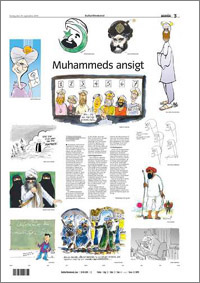 (VizReport) How can pictures printed in a Danish newspaper last September be causing such massive upheaval today?
  The best cartoon of the lot (by Arne Sørenson) goes directly to the heart of Bluitgen’s dilemma. It depicts an artist sweating nervously as he surreptitiously works by low light, windowshade drawn, on a picture of what we are told is Mohammed.
  However, that’s exactly what appears to have happened to hundreds–maybe thousands–of people in advance of the September 11, 2001, terrorist attacks. While countless people dreamed of those events in the days prior to their ultimate unfolding, there also exists a catalogue of media products (created in the months prior) that chronicle the story in chilling detail.
 Mark that Calendar
 “Live Scenes from New York”
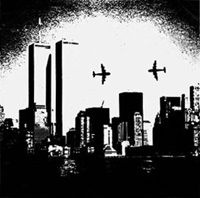 Two Twins in One
 Later, I found the following… The year 1462 was the birth year of both renowned German cryptographer Johannes Trithemius (speaking of hidden messages) and Louis XII of France. Curiously, it was also the year in which Vlad III of Wallachia (Dracula) was defeated and deposed by the Ottomans. He would rise again to rule for less than a year in 1476, but would die shortly after regaining his Transylvanian throne. It is worthwhile noting that Vlad, despite his infamous proclivity for extreme violence (especially for impaling his victims), was not only a central figure in the crusade against the Islamic Ottoman Empire, but was widely credited with halting the spread of Islam into Europe.
 A Highly Explosive Pre-Echo
 A Sombre View
 A Cartoon Becomes Less Funny
 imahd.ca