Tag Archives: Iran

The Martyrdom of Mousavi

Iranian opposition leader and former presidential candidate Mir Hossein Mousavi has declared that he is prepared for martyrdom in his quest to reform the Iranian political system. Essentially, he has invited the government to slay him, knowing that this will only bolster his cause among the disenchanted  people of his country.

And yet, on the same day, another former presidential candidate, Mohsen Rezai, has delivered a letter to the Iranian government stating that Mr. Mousavi has changed his position and is now willing to work with the present government to effect change and that he no longer disputes the legitimacy of last year’s presidential elections. The letter welcomes Mousavi back to the fold and provides a veneer of plausible deniability for the government of Mahmoud Ahmadinejad in the event of Mousavi’s demise.

A major crackdown on dissent may be imminent.

Leave a comment

Filed under Chicanery, Conflict

Mideast: Dec. 8, 2009

Many small waves breaking at the same time. Strong undercurrents…

Lebanon
Israel appears to be moving toward giving up the north-half of the village of Ghajar to Lebanon, probably along with Shebaa Farms. This would effectively mean that no Lebanese territory would then be under Israeli control. (This could have been resolved much sooner, but for disagreements between Lebanon, Syria and the UN as to the true ownership of the lands in question.)

Residents of northern Ghajar who don’t wish to become Lebanese citizens would have the right (as full Israeli citizens) to remain in Israel, though they would have to leave their current homes in the north end of town. Some resettlement funds will probably be allotted by the government.

With the Israeli ‘occupation’ at an end, Hezbollah should stand down, but will they? They have recently deployed thousands of rockets south of the Litani River in direct contravention of multiple UN Security Council resolutions.

Syria
Indications seem to be that Syrian President Assad may be prepared to ‘get creative’ on certain issues related to the Golan Heights. (More on that soon…)

Gaza
Israel has notified various embassies that diplomatic visits to the Gaza Strip will not be possible through Israel at this time. While some people will be critical of the move, there’s an easy workaround for the problem — visit Gaza through Egypt instead.

If Hamas will not engage with Israel, then Israel should not be expected to facilitate the diplomatic adventures of Gaza’s overtly-militant Hamas government, which (only this week) tested out some new, sophisticated rockets freshly smuggled into the territory through its extensive tunnel network.

West Bank
As previously disclosed, PA PM Salam Fayyad will be running the show in Ramallah from now on, with PA President Mahmoud Abbas booking off work for an extended vacation.

There’s a distinct possibility that the Americans may be getting ready to hand over control of Palestinian security force training to the Brits and Canadians currently working on that mandate under US General Keith Dayton.

Upshot
The opportunity to achieve a lasting peace between Jewish and Arab Palestinians has rarely, if ever, been nearer. The opportunity to reach a peace deal between Israel and Syria, as well as between Israel and Lebanon, has absolutely never been closer.

But what about the Iranian ‘leadership’? They’re already dealing with fraying public control, a stumbling economy, apocalyptic delusions, looming international sanctions for their nuclear transgressions — and now this? Possible peace? It must be driving them crazy. And that’s the sort of thing that could be dangerous for everyone — if only because they’re the ones supplying the missiles to Hamas and Hezbollah.

1 Comment

Filed under Conflict, Peace

Chavez: Prepare for War Against U.S?

Hugo Chavez in painting

(Joe Raedle/Getty Images)

Venezuelan president Hugo Chavez has told his military to prepare for war against the United States.

Citing American use of Colombian military bases for anti-drug interdictions, Chavez asserts that Colombia has now become part of the United States and that American troops may attempt to invade Venezuela.

(Bloomberg) […] “The empire hopes to send them to fight against their Venezuelan and Ecuadorean brothers and other Bolivarian and Alba peoples to crush the Venezuelan revolution, just as they tried to do with the Cuban revolution in April 1961,” Castro wrote in a “reflection” published on the Cubadebate.cu Web site. The Alba bloc is a nine-member group of Latin American countries led by Chavez.

The presence of U.S. troops in Colombia is a “shameless foreign intervention in their internal affairs,” Castro said. The agreement amounts to the U.S.’s “annexation” of the South American country, he said.

A military attack on Venezuela would spread to other countries in the region because Venezuela has “friends” from Mexico to Argentina, Chavez said during the program.

“If the Yankee empire tries to use Colombia to attack Venezuela, the war of 100 years would begin,” he said. “The war would extend to other countries in the continent, from Mexico to Argentina. No one believes that a war against Venezuela would only be in Venezuela.” […]

Continue reading

Another interesting aspect of Venezuelan politics under Chavez

1 Comment

Filed under Chicanery, Conflict

Saudis Roll into Yemen

s_6360Saudi forces have crossed the border into northern Yemen in response to Houthi rebel incursions into the kingdom. Debkafile is reporting that a Saudi tank column rolled into Yemeni territory in support of the government in Sanaa, accompanied by Saudi armoured infantry with F-15s providing air support. This move is intended to counter growing IRGC (Iranian Revolutionary Guard Corps) influence on the western coast of the Arabian Peninsula and forestall a possible northward move by Yemeni rebels.

More details from AFP

~

_46693692_yemen_saada_hajja2_1109

Map: BBC News

The Shi’a Houthi (also referred to as Zaidi or Yazdi) rebels in northern Yemen have been armed and supported by Iran and are thought to be part of a broader, more ambitious Iranian government plan to displace the House of Saud, guardians of the Islamic holy cities of Mecca and Medina.


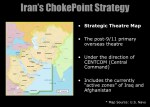
IranPlanVizReport published a chilling strategic analysis of Iran’s broader regional aspirations in 2005. Though our current timeframe is somewhat later than originally suggested in the report, the methods and conclusions suggested therein remain as relevant today as they were then. (Editor’s note: While we are presently unable to bring you the complete presentation, we did secure permission to post a much-condensed, low-resolution version of the report that was distributed in early 2006.)

Exclusive: Iran’s ChokePoint Strategy

QuickTime Player required. Right-click to download.

2 Comments

Filed under Conflict

IAEA to Iran: Explanation Required ASAP

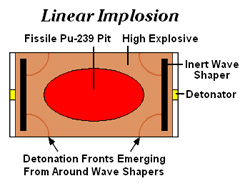
Linear_implosion_schematicAs disclosed in VizReport in 2005, Iran has likely been working with small-scale nuclear weapon designs since shortly after they received them from the A.Q. Khan proliferation network in the 1990s, along with some advanced centrifuge designs.

The warhead schematics, probably for Soviet-era scalable-yield nuclear landmine configurations, were designed to be small enough to be hidden inconspicuously on the battlefield, even inside hollowed-out rocks or logs. This also makes them ideal for deployment on small- to medium-scale ballistic or cruise missiles.

The same A.Q. Khan ‘care packages’ were received by Libya, North Korea and Iran, though Libya subsequently came clean and turned their materials over to the IAEA, effectively terminating their covert nuclear program. North Korea went on to produce a small arsenal of plutonium-driven atomic weapons, while Iran claims to be pursuing only a peaceful nuclear energy program. Today’s revelation, however, would seem to strongly suggest otherwise.

Furthermore, because the former Soviet designs were mostly plutonium-based, the IAEA investigation of Iran’s nuclear program may have perhaps focused erringly on its acknowledged uranium capabilities, rather than the possibility that it had initiated a dual-track weapons development approach.

More imahd.ca Iran coverage

~

For information on today’s disclosure, please read The Guardian’s story:

Exclusive coverage from The Guardian:

Iran tested advanced nuclear
warhead design – secret report

Watchdog fears Tehran has key component to put bombs in missiles

The UN’s nuclear watchdog has asked Iran to explain evidence suggesting that Iranian scientists have experimented with an advanced nuclear warhead design, the Guardian has learned.

The very existence of the technology, known as a “two-point implosion” device, is officially secret in both the US and Britain, but according to previously unpublished documentation in a dossier compiled by the International Atomic Energy Agency (IAEA), Iranian scientists may have tested high-explosive components of the design. The development was today described by nuclear experts as “breathtaking” and has added urgency to the effort to find a diplomatic solution to the Iranian nuclear crisis.

The sophisticated technology, once mastered, allows for the production of smaller and simpler warheads than older models. It reduces the diameter of a warhead and makes it easier to put a nuclear warhead on a missile.

Documentation referring to experiments testing a two-point detonation design are part of the evidence of nuclear weaponisation gathered by the IAEA and presented to Iran for its response.

The dossier, titled “Possible Military Dimensions of Iran’s Nuclear Program”, is drawn in part from reports submitted to it by western intelligence agencies.

The agency has in the past treated such reports with scepticism, particularly after the Iraq war. But its director general, Mohamed ElBaradei, has said the evidence of Iranian weaponisation “appears to have been derived from multiple sources over different periods of time, appears to be generally consistent, and is sufficiently comprehensive and detailed that it needs to be addressed by Iran”…

Continue reading

For more background on Pakistani scientist A.Q. Khan’s proliferation
network, see this
September 10th story from the Economist.

7 Comments

Filed under Chicanery, Conflict, Science