

The Resettlement of Khuzestan
Here’s a letter that came by way of the British Ahwazi Friendship Society.
In it, Mohammad-Ali Abtahi, former Chief Secretary of former President Khatami’s Office, details a plan by which the majority Arab population of the oil-rich province of Khuzestan can be reduced to less than a third of the current regional demographic; a planned relocation of about 1.25 million people. During the past ten years (the end of the target window for the program), few Ahwazis have agreed to be moved, but their majority status in Khuzestan has been eroded by a steady, government-sponsored influx of Azeris and Persians. Translation follows:

Translation:
Emblem of the Islamic Republic
ISLAMIC REPUBLIC OF IRAN
Office of the President
Head of the Executive Office
Number Date Attachment 5/316/20675 (hand written)
TOP SECRET
In the Name of Allah
Head of the respectful Department of planning and budget- Mr. Dr. Najafi
With greetings:
Pursuant to the policies set forth, and the legislation approved by the National Security
Council, with regards to changing the population demography of Arabs of Khuzestan and their appropriate resettlement to other parts of the country, it is necessary that the attached approved instructions be directed to all relevant subsidiary organizations for execution.
1. The Arab population of Khuzestan must be reduced to a third of the total population of
Khuzestan within 10 years, with the rest of the population to be composed of Farsi-speaking residents and migrants.
2. On the resettlement of other ethnic groups, especially the Azeri (Turks) to Khuzestan
province, in addition to the facilities approved under legislations # 16-32/971/5-7, dated
14/4/1376 (July 5, 1997) – other arrangements have been made to facilitate this (forced resettlement) which will be announced in the future.
3. It is necessary to increase the resettlement of their (Arab) educated class to other provinces, especially to Isfahan, Tehran and Tabriz.
4. Proof of the existence of this ethnic group (Arabs) should be eradicated, including the
changing of remaining (Arabic) names of cities, villages, regions and streets to Farsi names.
5. Arabic-speaking people should be used for the execution of this legislation, although the secrecy of this programme must be respected.
6. Newly approved legislation regarding the (forced) migration of (university) students, civil servants, teachers, military and security forces and farmers to other provinces, are attached.
Signature
Sayed Mohammad-Ali Abtahi
TOP SECRET 27686/62 2/5/1377 (July 24, 1998)
Carbon Copy:
1. Ministry of Information (Security)
2. Ministry of Interior
3. Ministry of Housing and Urban Development
4. Ministry of Culture and Islamic Guidance
.
–
And I thought that President Khatami was considered a ‘moderate’?
EMM – Earth, Moon, Mountain

Earth image (in foreground) adapted from original image by Heikenwaelder Hugo, Austria under Creative Commons Attribution ShareAlike 2.5 license. The same license applies to this image, Author: imahd.wordpress.com
The Syrian ex-Nuclear Site
The following is a collection of images taken during (and after) the construction of the Syrian facility bombed by Israeli commandos on September 6, 2007.
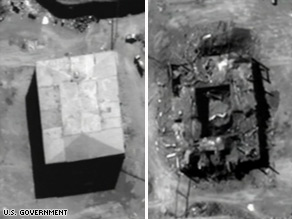 The images at right show the central building of the Syrian site before and shortly after the Israeli strike.
Just after this satellite image capture, the Syrians bulldozed the site, poured a concrete foundation over the ruins and constructed a new building on top of the original. Even so, they have been unwilling to allow soil samples to be taken by the IAEA (International Atomic Energy Agency).
Here’s a wider view of the building and site which is less than 1 km from the Euphrates River; a location ideal for the cooling requirements of a reactor:

Here’s a view of the period after the mission, with the main reactor building flattened by bulldozers:

Here’s the main building under construction before an external sheath was installed to disguise the reactor’s key features:

Inside the building. Here we can see the rebar put in place for the pouring of the cement to create the facility’s central cooling tower:

The steel reactor liner with cooling tubes:

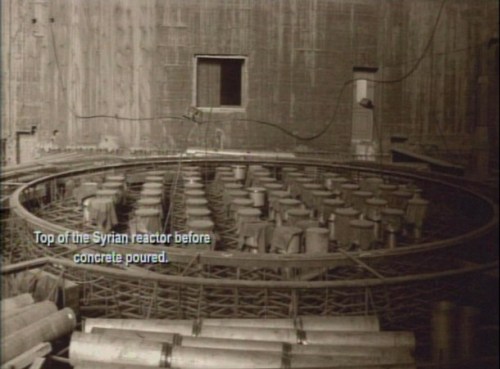
Top of the reactor prior to concrete being poured:
The innocuous looking exterior:

Another innocuous building; this one in Yongbyon, North Korea:

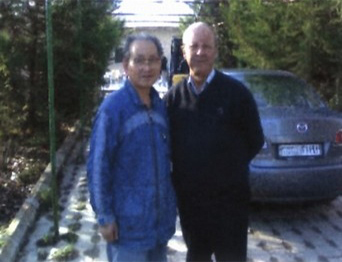
Head of the North Korean reactor fuel plant with the head of the Syrian Atomic Energy Commission, in Syria:
New building going up at the site of the former Syrian nuclear reactor complex:

ISIS Report – October 23, 2007 (PDF – 1.2 MB)
China’s Strategic Modernisation
An interesting report on US-Sino relations and competition from the US State Department’s International Security Advisory Board (ISAB) – October 1, 2008.
China’s Strategic Modernization
Report from the ISAB Task Force
The Secretary’s International Security Advisory Board (ISAB) was asked to examine China’s strategic modernization, including the principal underlying motivations. Based on this review, the Board was asked to recommend approaches that~could “move the U.S. China security relationship toward greater transparency and mutual confidence, enhance cooperation, and reduce the likelihood of misunderstanding or miscalculation that can contribute to competition or conflict.”

 imahd.ca